Run LLMs on your own infrastructure, open to every team through one gateway.
We build the GPU infrastructure and serving layer for open-source models, then put one gateway in front: an API gateway for apps, an agent gateway for tool calls, an MCP gateway for IDEs and chatbots. Data stays inside your network; cost and access are visible per team.
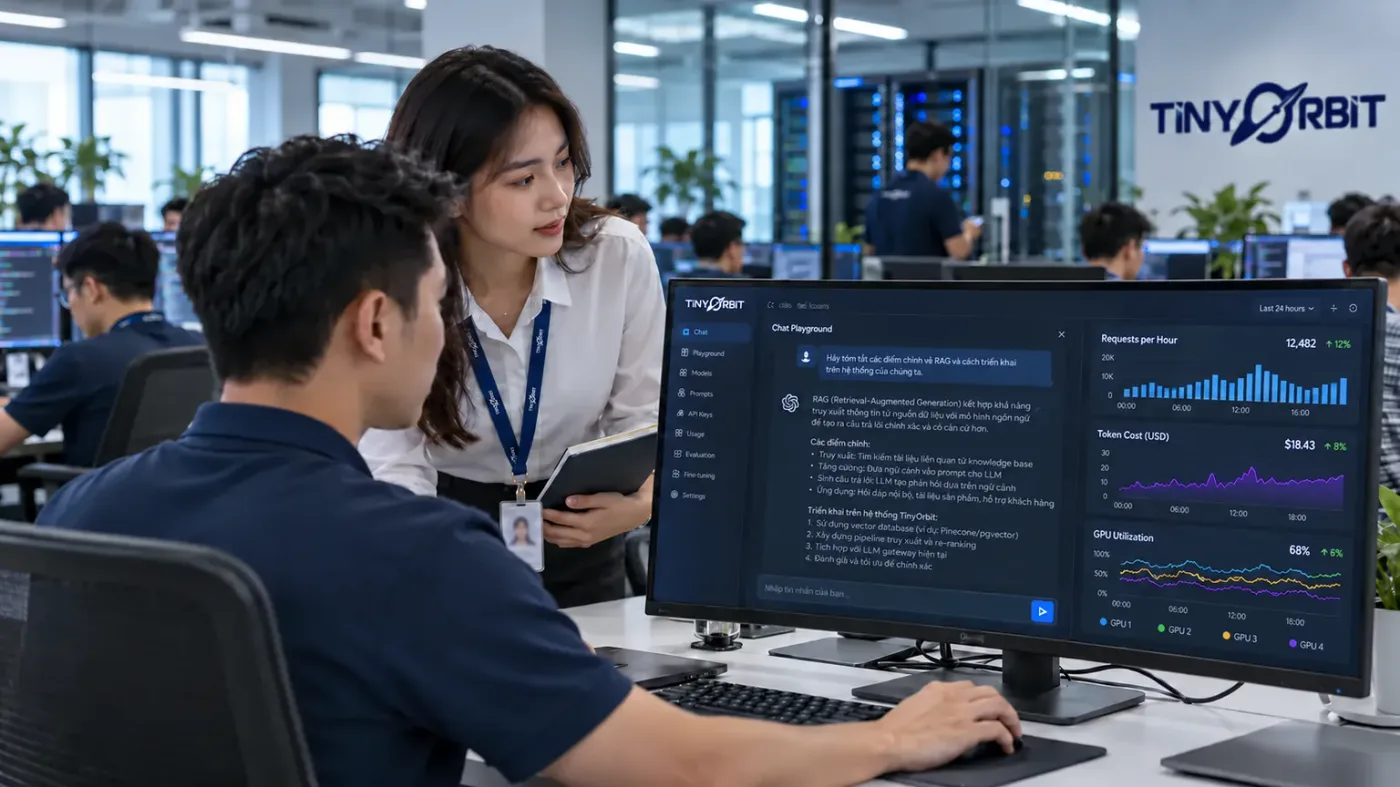
AI is already in use. Nobody can see it.
Five things we see at almost every company starting with LLMs. Scroll down to see how each one is fixed.
From GPUs to every app, in one picture.
Drag to rotate, use ◀ ▶ ▲ ▼ to pan, + / − to zoom, hover any component for details. The gateway lifts into place as you scroll.
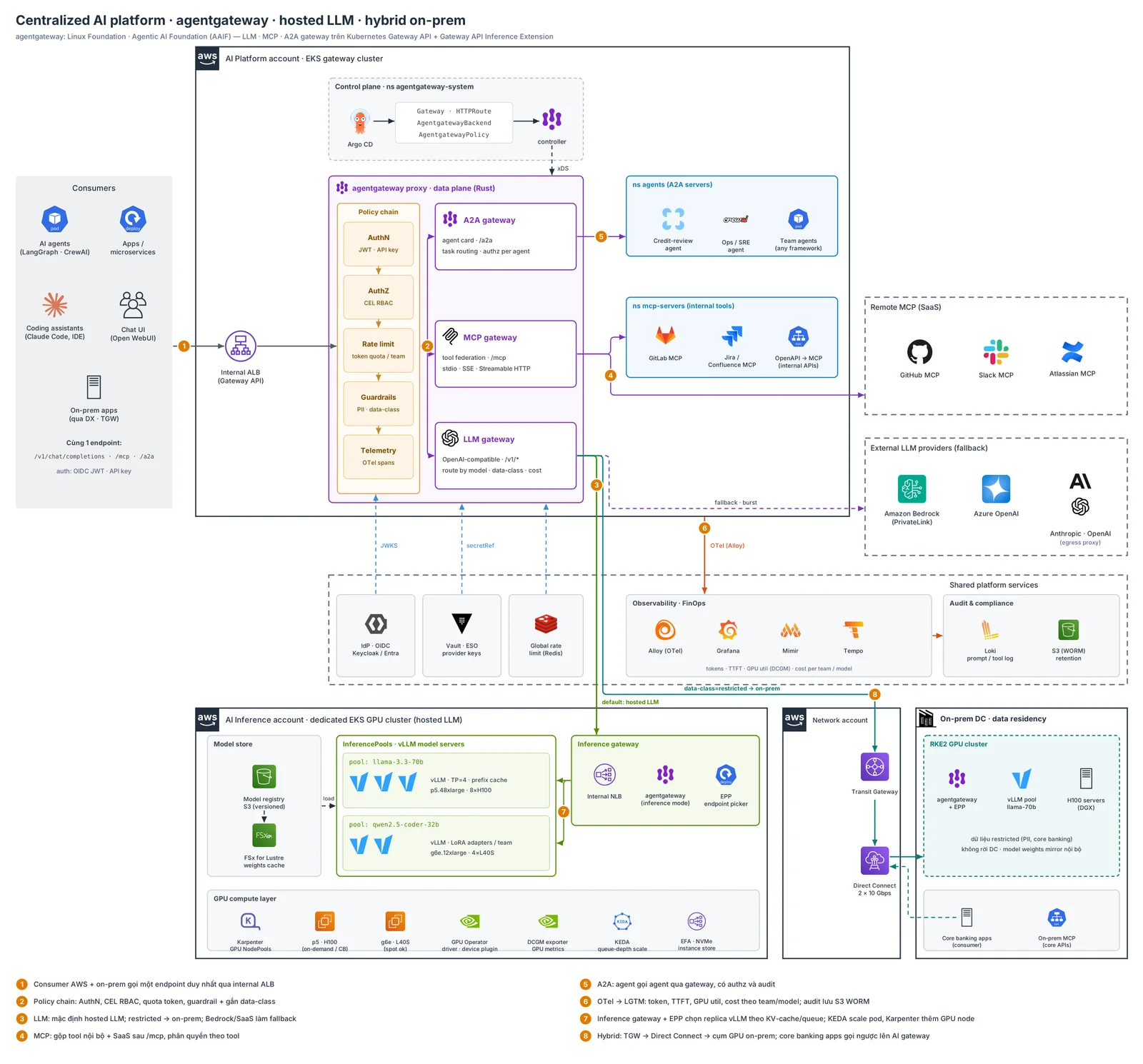
Reference architecture: agentgateway on EKS is the single endpoint for /v1, /mcp and /a2a, with a policy chain of AuthN → AuthZ → rate limit → guardrails → telemetry. Hosted LLMs run on a dedicated GPU cluster (vLLM, inference gateway, Karpenter); restricted data goes over Direct Connect to the on-prem GPU cluster, with Bedrock and SaaS only as fallback.
Open-source models, running on your GPUs.
Three layers built as code on Kubernetes, from GPU to endpoint, so models deploy, roll back and scale like any other workload.
One gateway, three planes.
Apps, agents and IDEs all pass through one gateway. Each plane has its own policies, click one for details and a sample config.
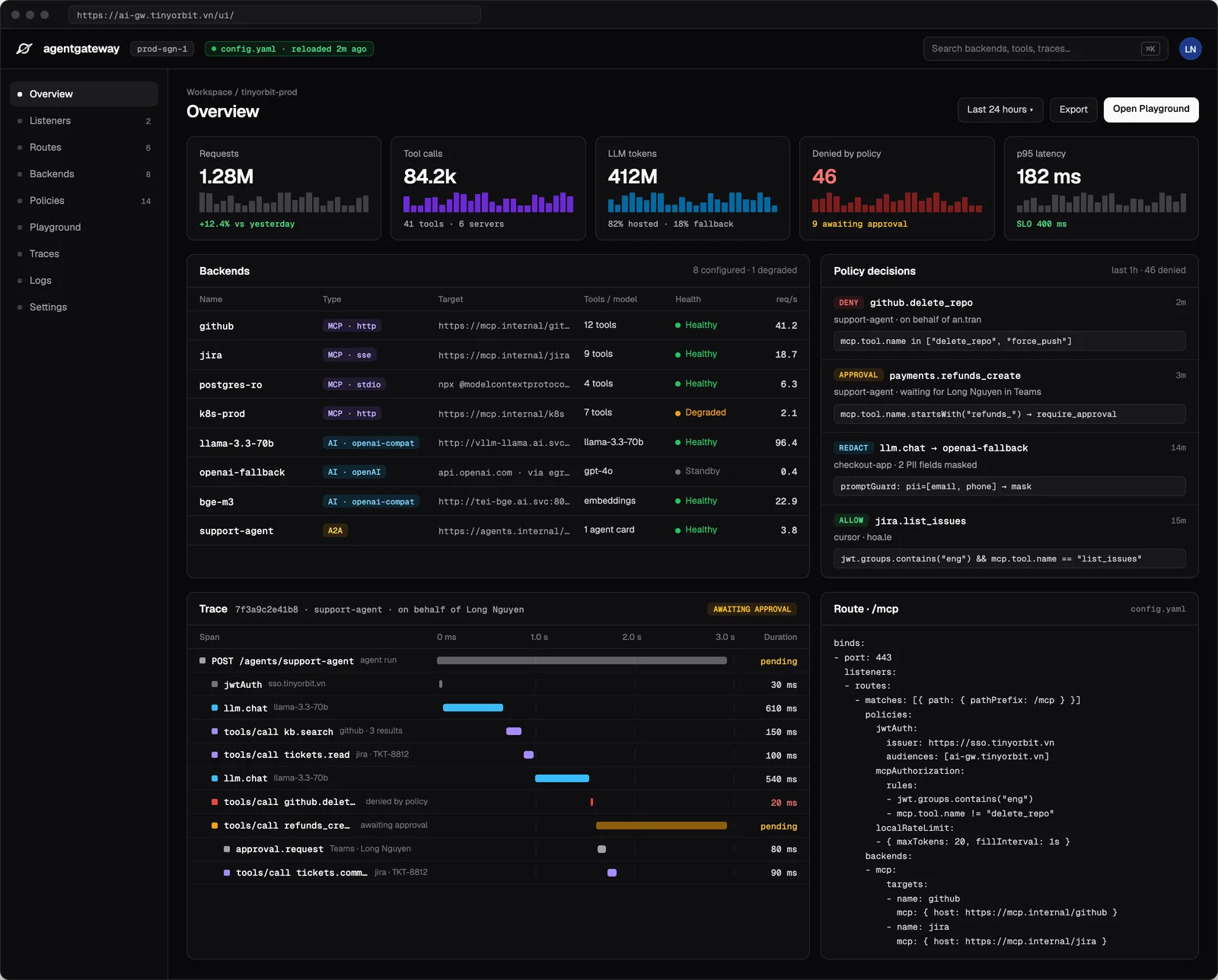
The gateway runs on agentgateway (open source, Linux Foundation). One screen for the ops team: which MCP and model backends are healthy, what policy just blocked, and a step-by-step agent trace, here support-agent was denied delete_repo and is waiting for Long Nguyen to approve a refund in Teams.
Every MCP server has a name, an owner and permissions.
The registry is the source of truth: which servers run, which team owns them, which tools are granted to whom. IDEs and agents need just one URL.
Every agent runs in its own box.
The code an agent writes, the tools it calls and the files it downloads all run in a throwaway sandbox. The kernel is isolated, there is no egress by default, and secrets are issued per session and wiped when the job ends.
What we build and hand over.
From GPUs to the gateway, all code in your repo, with runbooks and a trained ops team.
6–12 weeks, from GPUs to the gateway.
Start with one use case and one model; the gateway comes first so every team shares it from day one.