Security lives in the pipeline, not on release day.
Your team keeps pushing code like any other day. The pipeline scans secrets, code, dependencies and images, signs every artifact and stops bad config before it touches a cluster. When the audit comes, the evidence is already there, on cloud, on-prem or fully air-gapped.
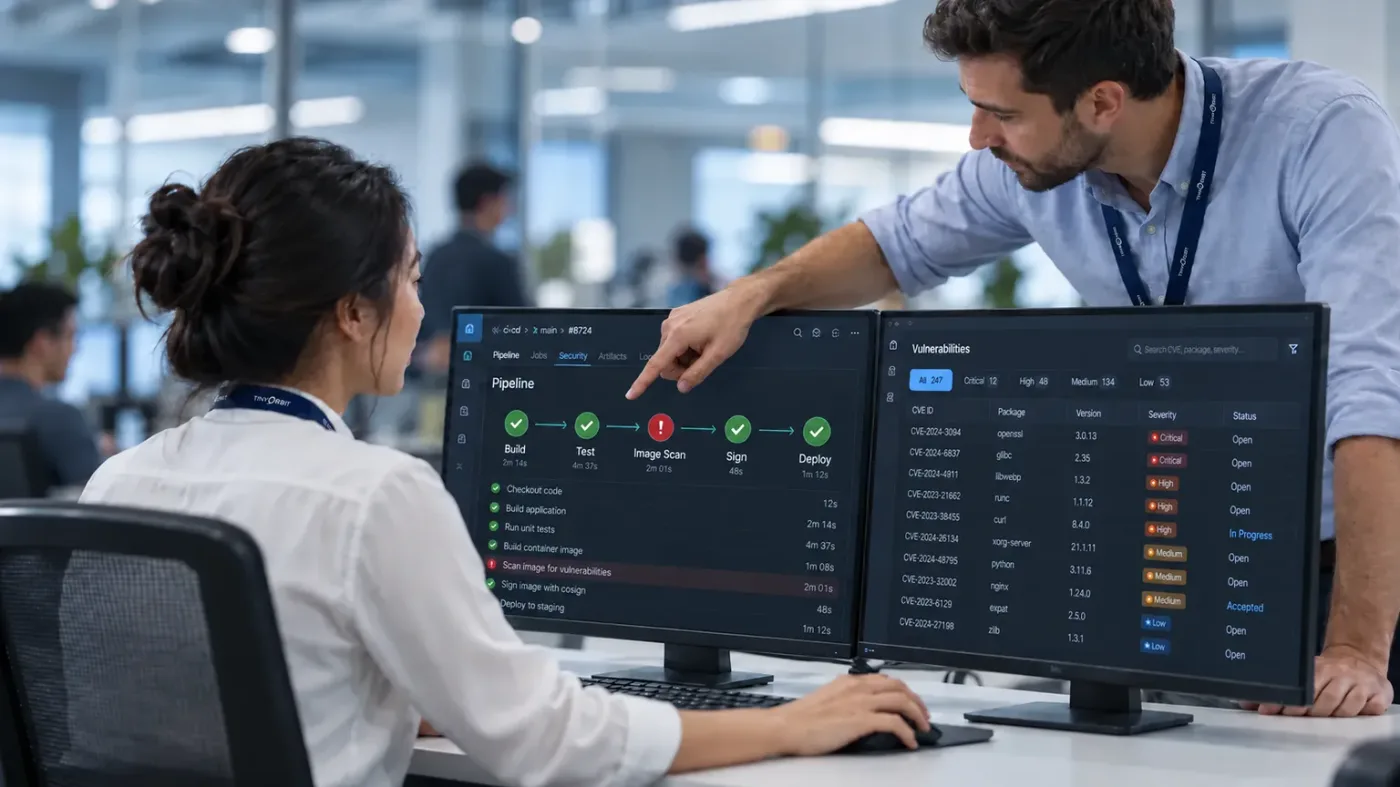
Security comes last, and releases wait.
When security is a check the week before release, every finding turns into a fire drill. Here are the five we run into most:
Same loop. The difference is where security sits.
DevOps made shipping fast, but security often sits outside the loop and only shows up at the end. DevSecOps puts it inside every stage, from plan to monitor.
Twelve gates from commit to production.
Gates run in parallel where they can, fail early and tell you why. Click any gate to see what it catches.
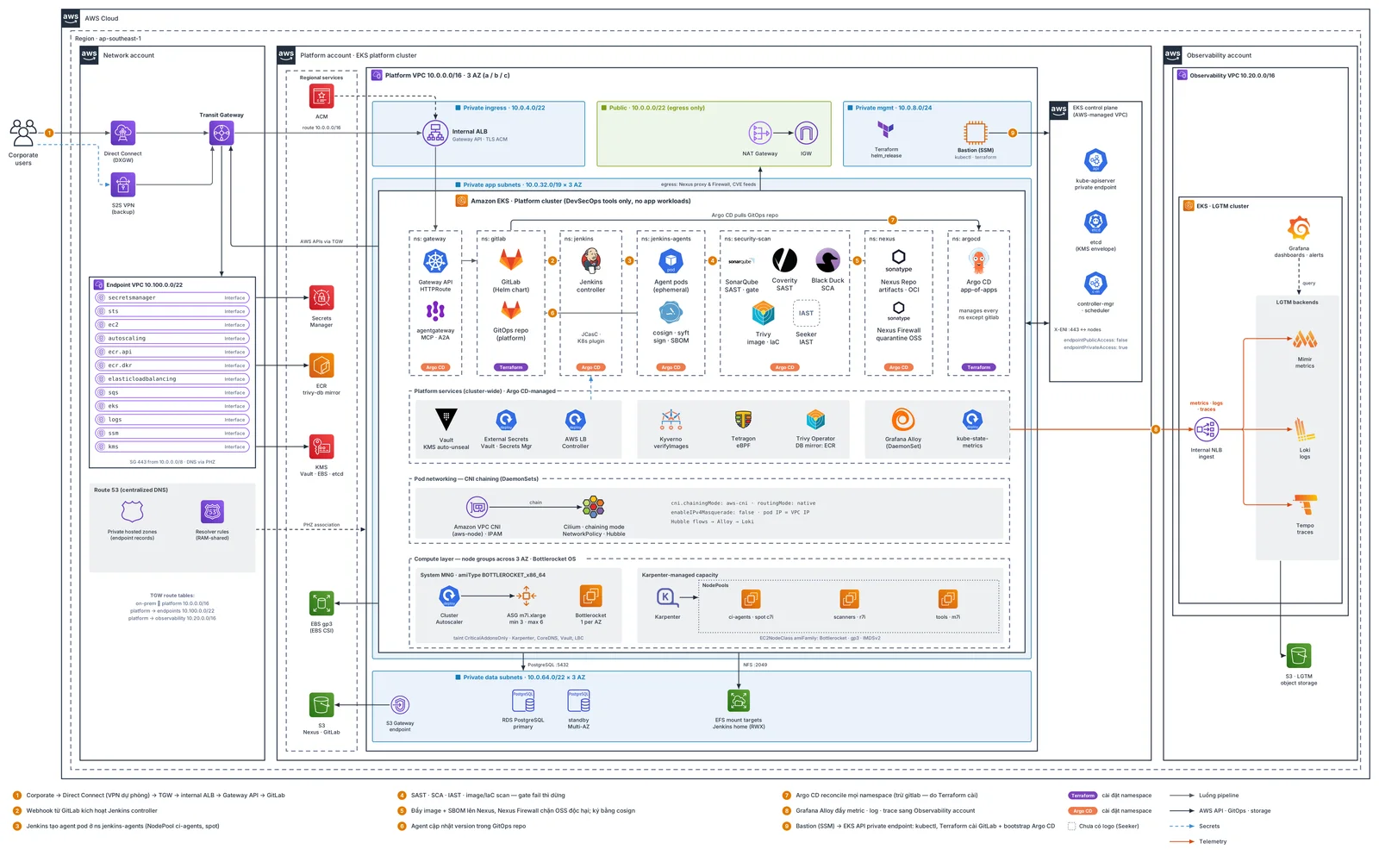
A dedicated cluster for the whole DevSecOps toolchain.
The EKS platform cluster runs only tools. GitLab, Jenkins, scanners, Nexus, Argo CD, never app workloads. Network, endpoints and observability live in separate accounts; everything is built with Terraform and GitOps.
Know exactly what runs in production.
Every image carries an SBOM, a signature and provenance. Clusters only accept artifacts that trace back to a signed commit.
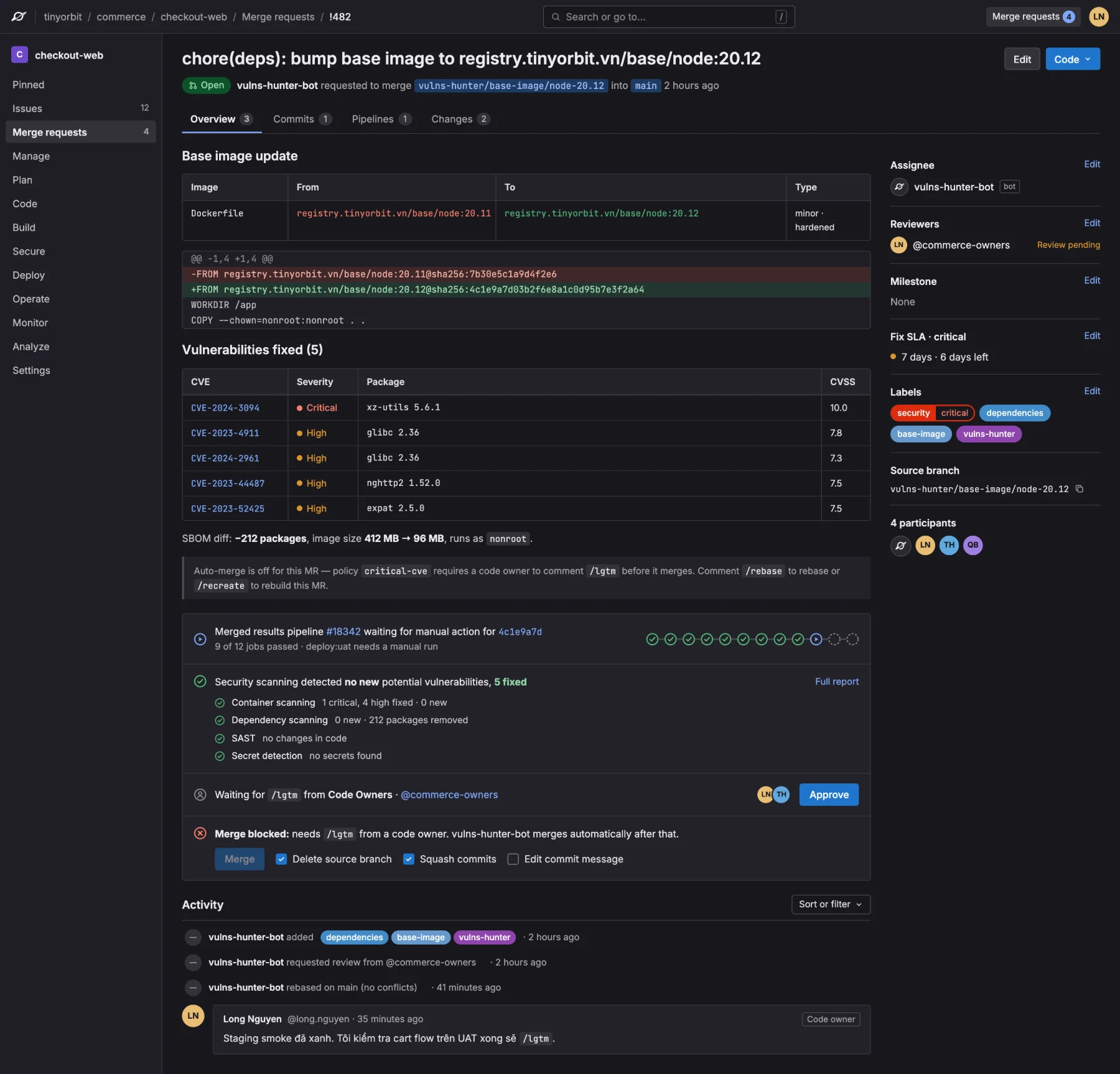
A patched base image lands; vulns-hunter-bot has already opened the merge request.
Every night vulns-hunter-bot checks SBOMs against new advisories. When a patched base image lands on registry.tinyorbit.vn, the bot opens a merge request and runs all 12 gates. Green patches merge on their own; majors and critical CVE fixes wait for a code owner’s /lgtm.
One report for every system, daily, weekly, monthly or quarterly.
Scan results roll up by system and owner and reach the right people on schedule. When a zero-day drops, one SBOM lookup tells you what’s exposed.
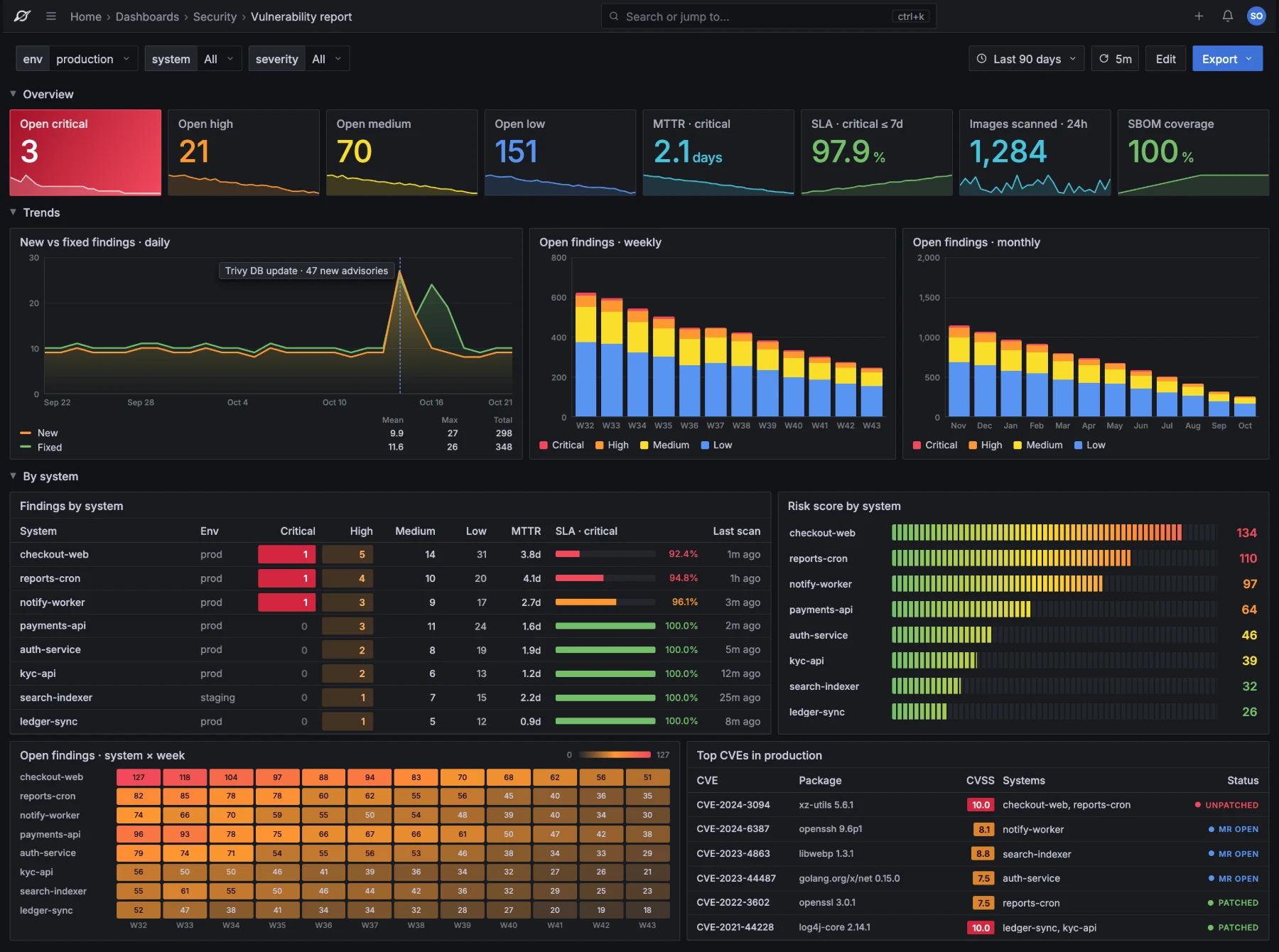
No internet? All 12 gates still run.
Banks, telcos and government agencies often cut their systems off from the internet entirely. We build the whole toolchain inside. Git, registry, vulnerability DB, plus a transfer zone that brings updates in under control.
Audit evidence that falls out of the pipeline.
Each control maps to a specific gate or policy. When the audit comes, you export a report, nobody hunts for screenshots.
Protection while it runs, too.
The pipeline stops new mistakes. The rest keeps cloud, clusters and people on standard.
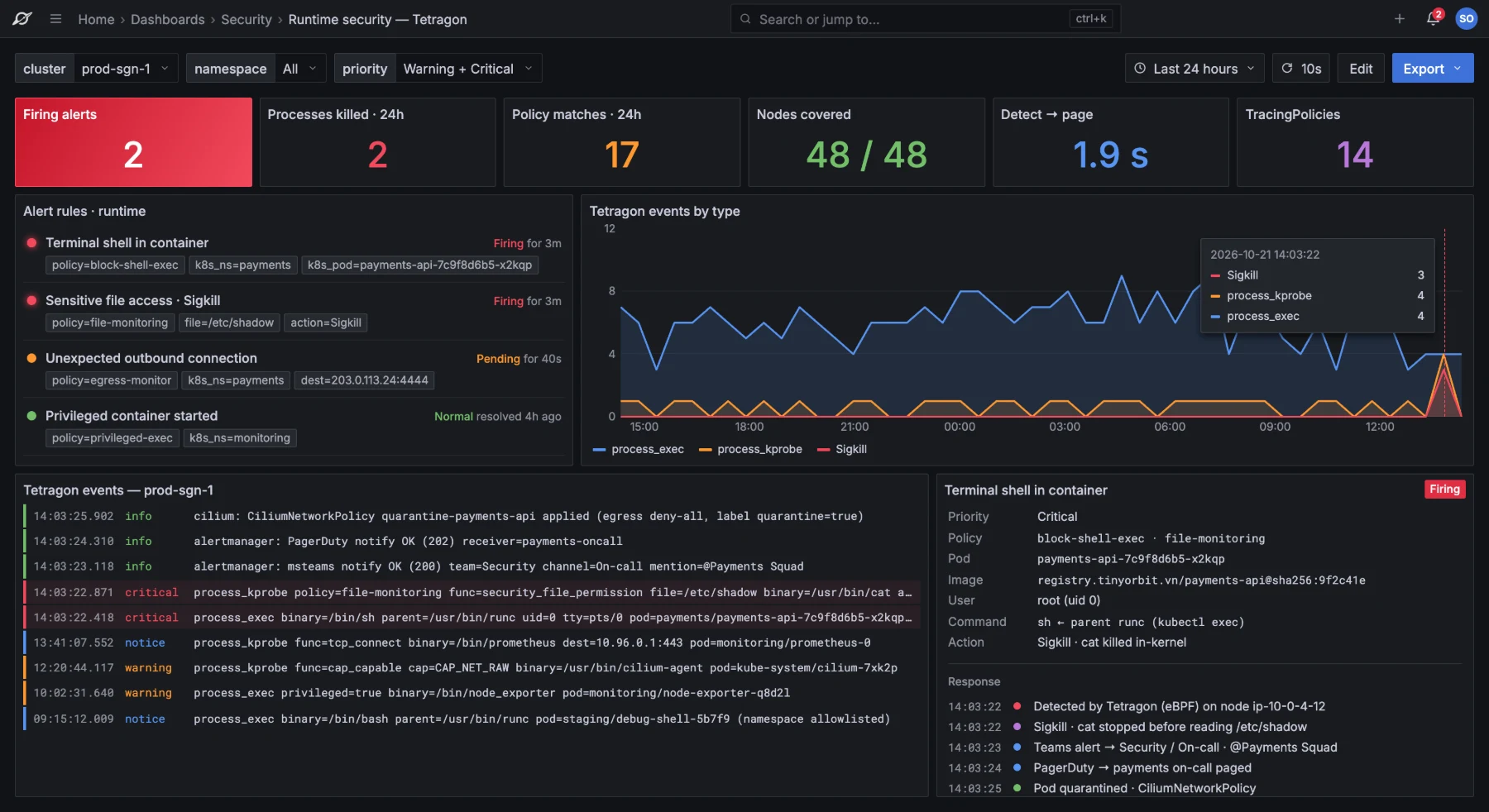
Someone opens a shell in a container; on-call knows within 2 seconds.
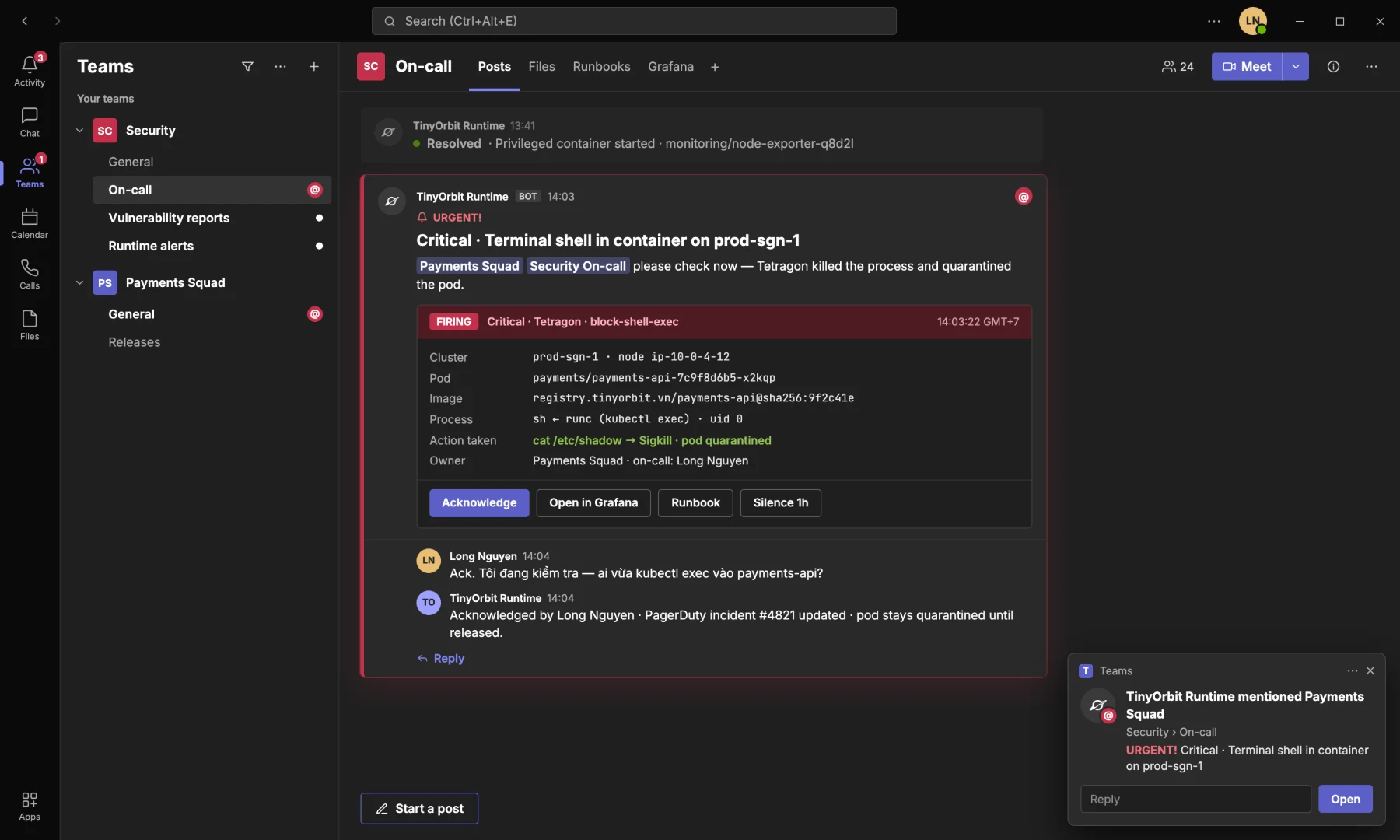
Runtime security watches processes inside the kernel with eBPF. The read of /etc/shadow is stopped on the spot, an alert lands in Microsoft Teams, mentioning the owning team, and PagerDuty, and the pod is quarantined while the team responds.
The alert lands in the On-call channel and mentions the service’s owning team and whoever is on call. Acknowledge right on the card; PagerDuty updates itself.
4–8 weeks, tightening step by step.
Gates start in warn mode and block later, so your team never gets locked out mid-sprint. Air-gapped setups add about 2 weeks for the transfer zone and mirrors.